
Article · AI in Banking
The Credit Card Usage: Financial Stability, Debt, and Usage Unveiled
94% of adults in the USA had a bank account in 2023. Among adults with incomes below $25,000, 77% had a bank account, while 100% of adults with incomes over $100,000 had one.
Dato Arif Siddiqui · 23 Jul 2024
Bank Account Ownership
- 94% of adults in the USA had a bank account in 2023. Among adults with incomes below $25,000, 77% had a bank account, while 100% of adults with incomes over $100,000 had one.
- By the end of 2023, 72% of adults reported being at least financially stable, with 39% indicating they were "doing okay" and 33% "living comfortably." Meanwhile, 19% were "just getting by," and 9% found it "difficult to get by."
Credit Card Ownership
In 2023, 82% of adults had a credit card.
Nearly all adults with an income of at least $100,000 had a credit card, compared to 46% of those earning less than $25,000, 75% of those earning between $25,000 and $50,000, and 89% of those earning between $50,000 and $100,000.
Global Credit Card Issuer Market
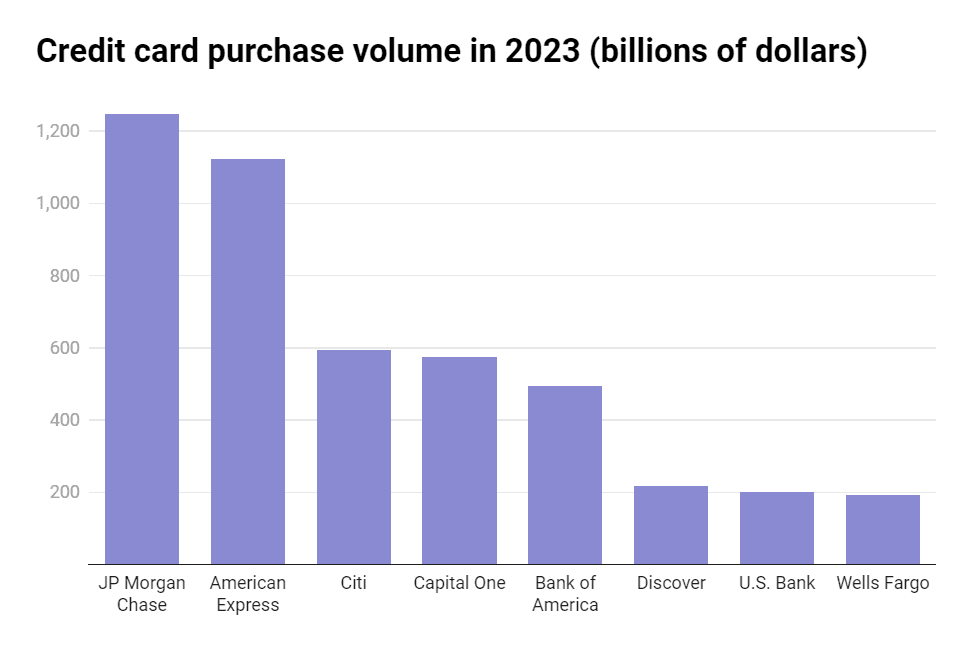
Eight major issuers dominated nearly 80% of the market's purchase volume, totaling $5.82 trillion in 2023. The average number of credit cards per US consumer was 3.9 in Q3 2023.
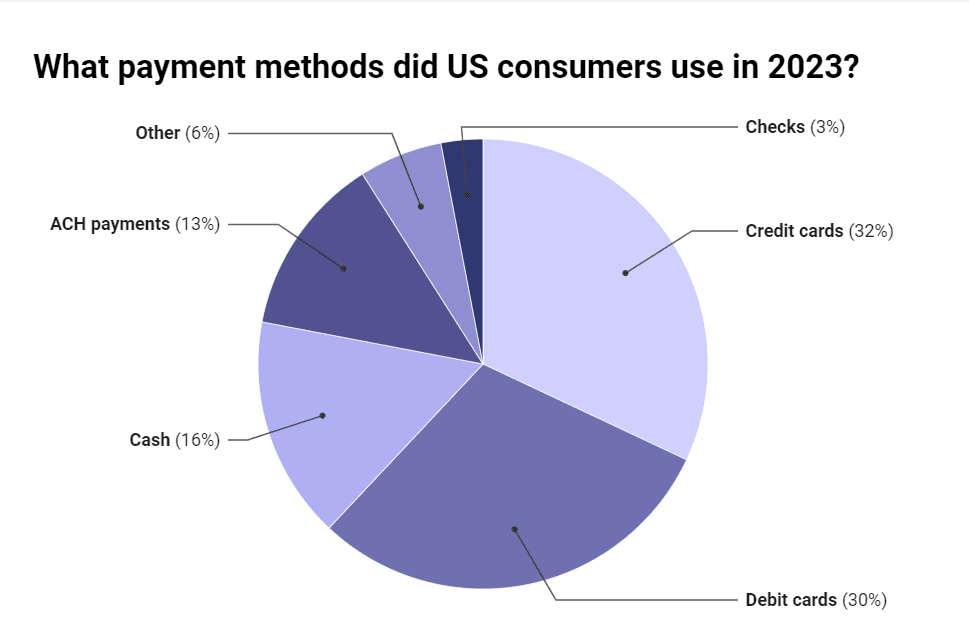
Payment method used by US customers;
Credit card payments accounted for 32% of consumer payments in 2023, up from 31% in 2022 and 18% in 2016.
In Q1 2024, the total credit card balance was $1.12 trillion, a $129 billion increase year-over-year but a $14 billion decrease from Q4 2023. The average credit card balance was $6,501 in Q3 2023, 10% higher than in Q3 2022.
53% of credit card holders did not carry a balance in the past year.
Credit Limits
The average credit limit in Q3 2023 was $29,855. Gen Z had the lowest average credit limit at $12,899, while Baby Boomers had the highest at $41,906. Credit limits were generally lower in areas with predominantly Black or Hispanic populations.
Credit Utilization
In Q1 2024, 23% of the national aggregate credit card limit was utilized, consistent with previous quarters. Higher utilization rates in Q4 2023 correlated with increased delinquencies in Q1 2024.
Credit Scores
The national average FICO score was 717 in October 2023, slightly down from 718 in April 2023.
Borrowers in low-income areas had a median credit score of 670. States like Minnesota, Vermont, New Hampshire, and Wisconsin had average FICO scores over 20 points higher than the national average. Boom towns experienced faster increases in average FICO scores compared to the national trend.