
Article · AI in Banking
Robo Advisor 4.0: Why AI-Driven Wealth Management Is No Longer Optional
The wealth management industry is at an inflection point. And if you're still debating whether AI belongs in your advisory stack, you're already behind.
Dato Arif Siddiqui · 10 Feb 2026
The wealth management industry is at an inflection point. And if you're still debating whether AI belongs in your advisory stack, you're already behind.
More than 60% of new wealth clients now expect digital-first experiences (McKinsey), and BCG warns that up to 40% of traditional advisory revenue is at risk if firms don't redesign around AI-powered personalization. This isn't hype, it's happening now.
Here's what banking and wealth management leaders need to know about Robo Advisor 4.0, and why it represents a fundamental shift, not just an upgrade.
What Makes 4.0 Different? It's About Intelligence, Not Just Automation
Early robo-advisors automated portfolio allocation using static questionnaires and periodic rebalancing. They cut costs, but they were rigid. Robo Advisor 4.0 is different; it learns.
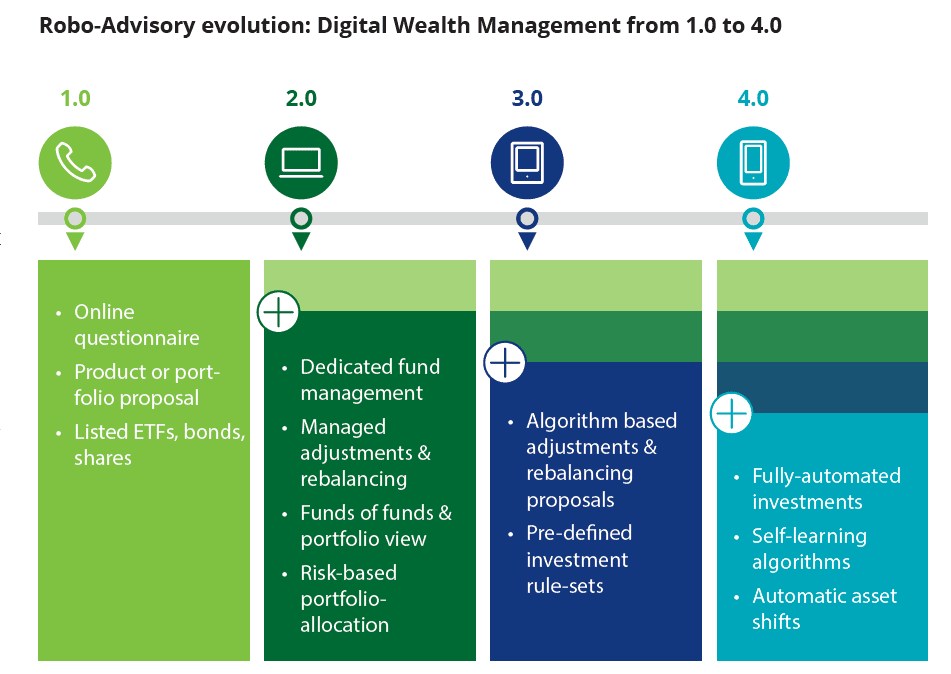
Source : Deloitte
These platforms embed machine learning, natural language processing, and behavioral analytics directly into advisory workflows. According to Deloitte, AI-driven platforms process millions of market signals daily, compared with the few hundred a human advisor can realistically monitor. The result? Real-time responsiveness to volatility, macro shifts, and changing client behavior.
This is the shift from reactive to predictive wealth management.
The Technology Stack: What Powers Robo 4.0
Robo Advisor 4.0 platforms run on three core layers: Machine learning models that analyze structured and unstructured data—identifying patterns across markets, portfolios, and customer actions. Natural language processing that enables conversational interfaces, letting clients interact with advisory systems using plain language. And behavioral analytics that refine strategies based on what clients actually do, not just what they say they'll do.
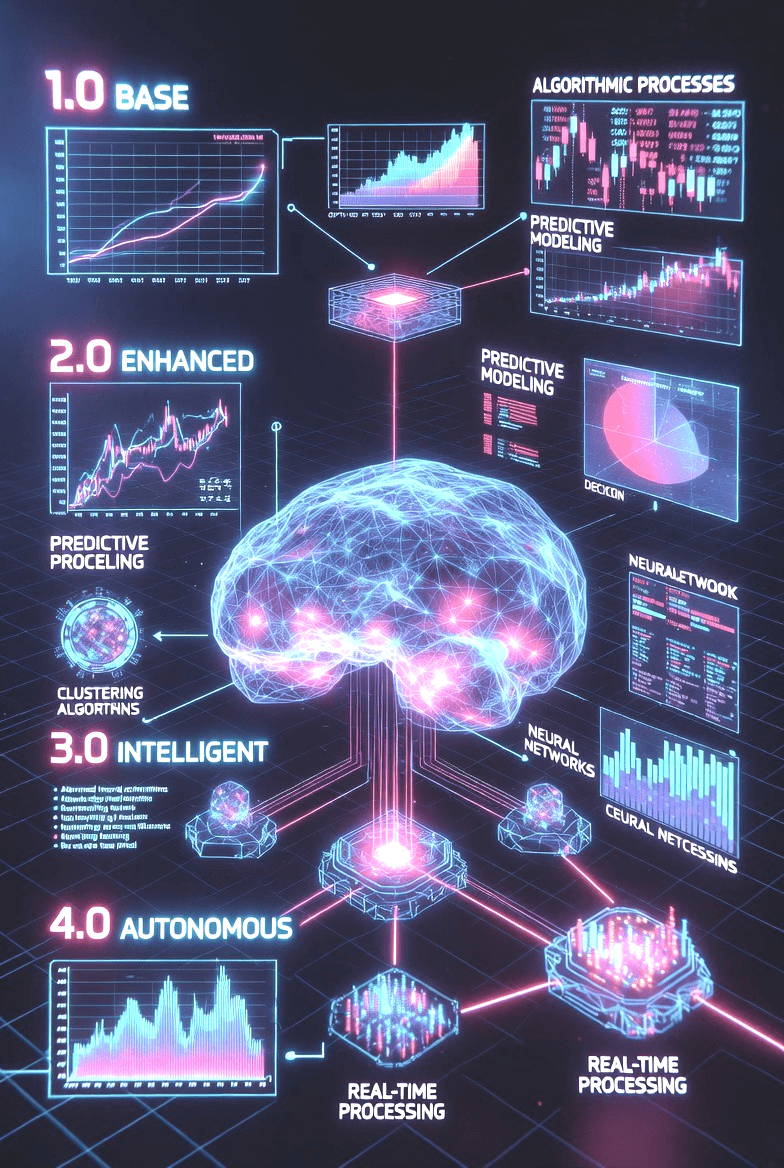
Accenture reports that AI-powered advisory systems improve portfolio optimization accuracy by up to 25% compared to static models. More importantly, these systems get smarter over time not stuck in legacy logic.
Personalization at Scale: The Game Changer
True personalization used to require dedicated advisors. That meant it was economically viable only for high-net-worth clients. Robo 4.0 removes that constraint entirely.
Every portfolio is dynamically tailored based on risk tolerance, life stage, income patterns, spending habits, and real-time market conditions. And it is delivered simultaneously to thousands or millions of clients.
BCG found that hyper-personalized advisory models boost client engagement by over 30% and significantly reduce churn in mass-affluent segments. Translation: banks can now offer white-glove service economics at retail scale.
Beyond Portfolios: Risk, Fraud, and Transaction Intelligence
Modern robo-advisors aren't just investment tools—they're holistic financial safety platforms.
Transaction monitoring and fraud intelligence are now integrated directly into advisory workflows. Using supervised machine learning, these systems assess transactions in real time and classify them as approved, rejected, or flagged for review.
Deloitte's Robo-Safe research shows AI-driven transaction monitoring reduces false positives by up to 50% while catching fraud patterns earlier. For banks, this means better client protection and lower operational overhead.
The Economics: Why This Isn't Just a Tech Play
Cost pressure in wealth management isn't going away. Robo Advisor 4.0 fundamentally changes the cost-to-serve equation.
McKinsey estimates that AI-enabled platforms lower operating costs by 20-35% while expanding service coverage to segments that were previously unprofitable. Automated portfolio management, AI-driven rebalancing, and digital servicing reduce overhead—without reducing quality.
This allows firms to scale wealth offerings without proportional headcount increases. That's not efficiency. That's transformation.
What Leading Banks Are Actually Doing
Robo Advisor 4.0 isn't theoretical. Major institutions are already deploying these capabilities:
Wells Fargo's Intuitive Investor combines automated portfolio management with digital personalization. Vanguard's Personal Advisor Services blends AI-driven optimization with human oversight, a hybrid model that scales expertise. Charles Schwab's Intelligent Portfolios focuses on fully automated, low-cost investment management.
The lesson? Robo Advisor 4.0 isn't one product. It's a strategic framework adaptable to different client segments and business models.
Business Impact: What Success Actually Looks Like
Banks adopting AI-driven advisory platforms report measurable wins: higher digital engagement, more consistent portfolio performance, reduced servicing costs, and improved scalability.
PwC notes that wealth managers using these platforms see faster onboarding and higher cross-sell success driven by better customer insights and more relevant recommendations.
And here's something often overlooked: explainable AI improves trust. When clients and regulators can understand how decisions are made, resistance to algorithm-driven advice drops significantly.
Regulation and Governance: The Non-Negotiables
AI in wealth management comes with regulatory scrutiny and rightfully so. Robo Advisor 4.0 platforms must align with fiduciary obligations, data privacy laws, and model risk management standards.
Governance frameworks need to ensure model explainability, auditability, and bias control. Deloitte emphasizes that successful deployments include strong explainability layers and continuous validation. Without governance, scale becomes risk instead of an advantage.
This isn't optional. Compliance and trust must be engineered in from day one.
What This Means for Leadership
Robo Advisor 4.0 is not a technology upgrade; it's an operating model shift.
Banks need to redesign data architectures, advisory workflows, and talent strategies to support AI-driven decision-making. This requires alignment across technology, compliance, operations, and customer experience—not just IT.
BCG found that institutions treating robo-advisory as a standalone digital channel underperform those embedding it across the entire wealth value chain. Integration matters more than innovation.
The Bottom Line
The future of wealth management is intelligent, adaptive, and continuous. Robo Advisor 4.0 represents the convergence of AI, personalization, and trust, at scale.
This isn't about replacing human advisors. It's about augmenting them. The firms that understand this balance and act on it will define the next decade of wealth management.
Those who delay risk losing relevance in an increasingly digital financial ecosystem.
What are you seeing in your organization? Are you moving toward AI-driven advisory, or still evaluating? I'd be interested to hear where others are in this journey.
Key Sources:
McKinsey & Company – Global Wealth Management Reports
Boston Consulting Group – Digital Wealth and Personalization Studies
Deloitte – Robo Advisory and Robo-Safe AI Research
Accenture – AI in Wealth Management Reports
PwC – Asset and Wealth Management Insights