
Article · AI in Banking
How Good Is U.S. Bank Account Onboarding?
Research scope: 10 major U.S. banks | Evidence through September 2026
Dato Arif Siddiqui · 8 Sept 2026
Part 1 of a four-article - U.S. retail onboarding benchmark
Research scope: 10 major U.S. banks | Evidence through September 2026
Retail banks have invested heavily in mobile banking, digital identity, AI, APIs and modern core platforms. Yet the customer experience of opening a basic deposit account can still vary sharply by bank and by channel. This research asks a simple question: how mature is U.S. retail account onboarding when measured from the customer’s perspective?
The research question
The study examines JPMorgan Chase, Bank of America, Wells Fargo, Citi, U.S. Bank, Capital One, PNC, Truist, TD Bank U.S. and Fifth Third. The focus is not on who owns the newest technology. It is on what customers and bankers can actually use during onboarding.
That distinction matters. A vendor relationship does not prove a bank deployed a specific module. A deployed product does not prove it is integrated into the account-opening journey. And integration does not prove bankers or customers use it in practice.
A strict evidence model
To avoid technology-by-assumption, each finding is graded. A1 is bank-direct evidence. A2 combines bank and named-vendor evidence. B is a vendor case study naming the bank and solution. C is credible external reporting. D is a relationship or inference that cannot prove the capability. NV means no credible public evidence was found.
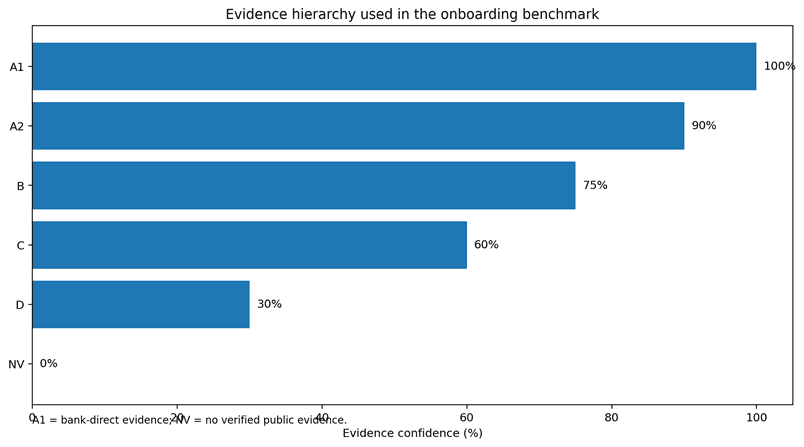
Figure 1. Evidence hierarchy used throughout the benchmark.
What Stage 1A measured
· Digital account opening and branch account opening.
· Identity capture, KYC/CIP and verification.
· ID scanning, OCR and field auto-population.
· Electronic disclosures and signatures.
· Published or evidenced opening speed.
· Cross-channel continuation and identity.
· AI-enabled servicing or onboarding capabilities.
· Evidence of technology being implemented and used.
The first major finding: digital is mature
Digital account opening is now a baseline capability across the peer group. The strongest public speed benchmark came from U.S. Bank. Its Bank Smartly pages state that customers can apply online in under five minutes, and the bank also states that a checking-and-savings bundle can be completed through one application in under five minutes.
U.S. Bank also states that existing customers can have personal information prefilled. These are important benchmarks because they reduce both elapsed time and repeated data entry.
The second finding: branch automation is far less visible
Public evidence becomes much weaker when the analysis moves inside the branch. Banks commonly disclose acceptable IDs, appointment options and account-opening requirements. They rarely disclose whether a banker can scan an ID, extract its data through OCR, auto-populate the application, run KYC and fraud checks in parallel, and complete the journey in one workspace.
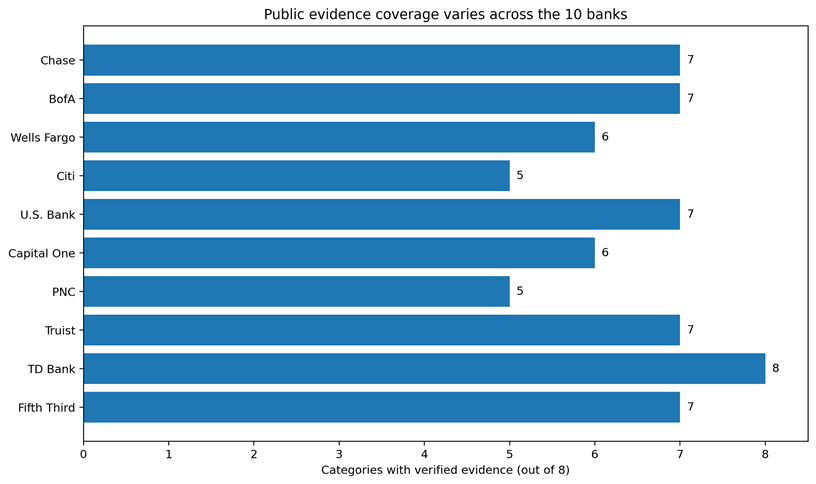
Figure 2. Stage 1A public evidence coverage across eight capability areas.
A revealing channel contrast
The clearest illustration comes from published guidance rather than an inferred technology comparison. U.S. Bank markets a digital checking application in under five minutes. Chase tells students opening certain accounts in a branch to plan to spend an hour. These are not identical products or customer cases, so the numbers should not be treated as a direct performance test. But they expose the broader modernization issue: a highly optimized digital front door can coexist with a much heavier assisted journey.
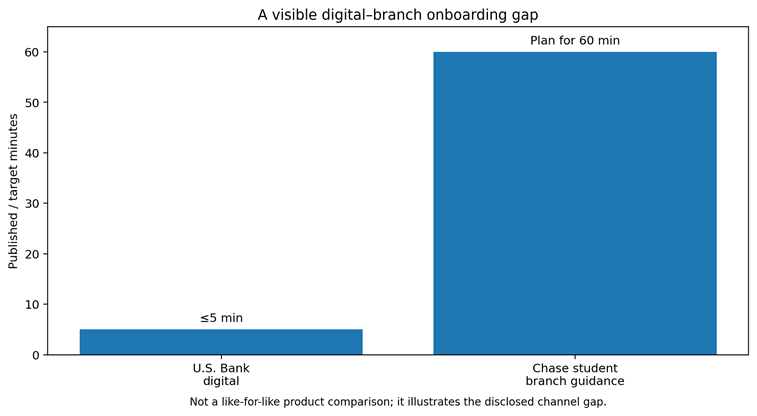
Figure 3. Published examples illustrating the digital–branch gap.
Cross-channel design is becoming more important
Capital One provides a useful pattern. Existing customers can generate a personalized QR code in the mobile app for in-person identity verification at a branch or Café. Customers who encounter additional identity requirements during an account application may also be directed to a physical location for further verification.
TD Bank publicly documents several in-person verification methods, including debit card and PIN, physical identification, smartphone-assisted verification and single-use security codes. These examples show that identity can be treated as a reusable service across channels rather than a one-time form-filling exercise.
Onboarding should continue after account creation
Truist adds another dimension: activation. In 2025 it embedded electronic direct-deposit switching into its digital account-opening process with Atomic. Truist reported that 19% of new digital applicants who engaged with the feature completed the switch. This is strategically important because the goal is not merely to create an account number. The goal is to make the account funded, active and useful enough to become a primary relationship.
AI is already reshaping servicing
The peer group also shows that AI has moved beyond experimentation in customer servicing. Fifth Third launched an AI-powered mobile interface in June 2026 and describes it as a foundation for future agentic capabilities, including account opening. Bank of America continues to report large-scale Erica usage in its investor materials. However, current AI success in servicing should not be automatically scored as AI-powered account opening. The benchmark keeps those capabilities separate.
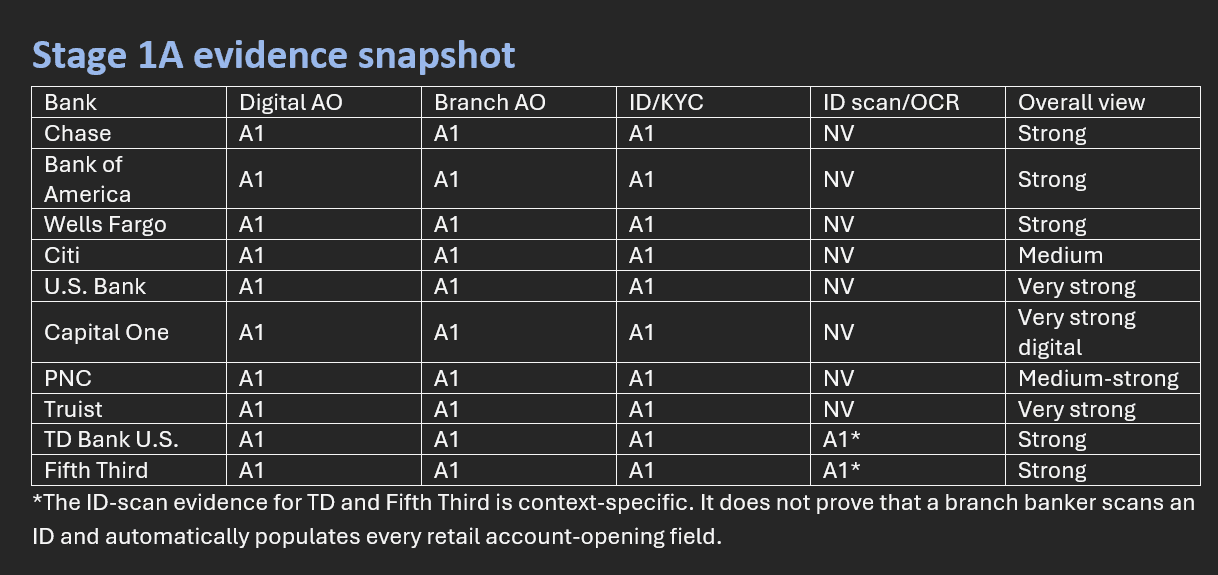
Stage 1A evidence snapshot
What the evidence does not prove
An NV is not a zero. It does not mean the bank lacks the capability. It means the capability could not be verified from credible public evidence. This is especially important for internal branch platforms, KYC orchestration, OCR, fraud engines and banker workflow.
The benchmark therefore separates performance from evidence confidence in the next stage. That prevents a bank from being treated as technologically weak merely because it discloses less.
The emerging benchmark
Stage 1A suggests that no single bank publicly demonstrates every best-in-class capability. Instead, different banks provide different building blocks: U.S. Bank for digital speed, Capital One for digital-to-physical identity, TD for branch verification, Truist for activation, and leading AI programs for ongoing digital engagement.
The next article converts these findings into a weighted seven-dimension benchmark and ranks all ten banks. It also introduces a separate confidence measure so that capability and disclosure quality are not confused.
Methodology notes
This is an independent evidence-based capability benchmark. It is not a mystery-shopping exercise, a regulatory assessment or a claim about every customer journey. Public sources were prioritized, with bank-direct evidence receiving the highest confidence.
Selected sources
U.S. Bank — Bank Smartly Checking and Smartly Bundle product pages.
Capital One — In-person ID verification requirements.
TD Bank — Security Center identity-verification methods.
Truist — Direct-deposit switching announcement, Dec. 18, 2025.
JPMorgan Chase — Student checking branch-opening guidance.
Fifth Third — AI-powered mobile interface announcement, June 17, 2026.
Bank of America — 2026 investor materials on Erica interactions.