
Article · AI in Banking
From Account Opening to AI Relationship Banking
Traditional onboarding has a finish line: the account is created, the documents are signed and the customer leaves the branch or closes the app. That definition is becoming obsolete.
Dato Arif Siddiqui · 19 Sept 2026
Part 4 of a four-article U.S. retail onboarding benchmark
How AI can turn onboarding from a transaction into a managed customer lifecycle
Traditional onboarding has a finish line: the account is created, the documents are signed and the customer leaves the branch or closes the app. That definition is becoming obsolete. A bank has not completed onboarding if the account is unfunded, the debit card is never activated, direct deposit never arrives, digital banking is unused and the customer's original financial goal disappears into a CRM note.
The next model is AI relationship banking: use governed AI before, during and after account opening to improve data quality, explain risk, support bankers, activate the relationship and continuously identify what the bank can do better for the customer.
The lifecycle: Validate → Protect → Open → Activate → Engage → Advise
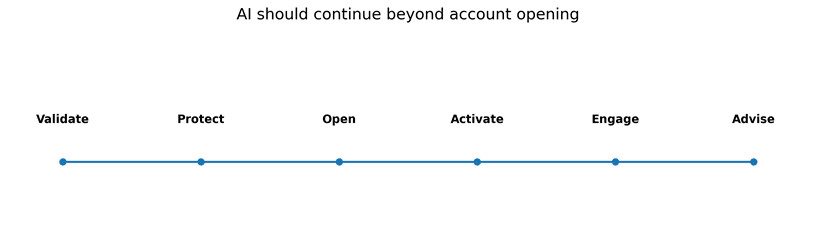
Figure 1. AI should support the full relationship lifecycle, not stop at account creation.
This is not a proposal to let a language model autonomously approve regulated accounts. The design separates AI assistance from deterministic controls and authorized execution. AI is strongest when it interprets context, summarizes evidence, identifies inconsistencies, retrieves approved policy, explains next actions and personalizes communication.
1. Validate: improve data quality while the customer is present
Account-opening data often contains small inconsistencies that create large downstream problems: an address entered differently from an ID, an employer in another state, an apartment number omitted, a phone number associated with unusual risk, or information that conflicts with an existing customer record.
An AI Verification Agent can compare captured information across approved sources and explain the discrepancy to the banker or customer. For an address, it can assess formatting and geographic plausibility and compare the application with the identity document and existing bank record. Mapping or postal information can support plausibility, but it should not become the authoritative KYC source.
The desired output is not simply PASS or FAIL. It is a reasoned status such as MATCH, PARTIAL MATCH, MISMATCH or REVIEW, accompanied by the evidence that caused the result.
Geographic anomalies need context, not automatic rejection
Consider a customer whose employer is in New York but who is opening an account with a Texas residential address. That may indicate fraud—but it may also reflect relocation, remote work, a temporary assignment or a recent transfer. AI can identify the inconsistency and ask one relevant question. The explanation becomes part of the case record, while formal risk rules determine whether further verification is required.
The principle is simple: AI investigates context. Risk rules decide.
2. Protect: combine policy, KYC and fraud intelligence
Bankers should not have to search multiple policy documents while a customer waits. A controlled Policy Copilot can retrieve only approved, effective and version-controlled procedures covering account opening, CIP, KYC, AML, product eligibility, fees, disclosures and exceptions.
It can answer practical questions: Is this document acceptable? Is the product available to this customer? Is additional address evidence required? Which disclosure applies? Every response should retain the policy identifier, version, effective date and source so the advice is auditable.
An AI Risk Orchestrator should explain—not replace—the controls
Identity verification, sanctions screening, PEP screening, internal blacklists, device intelligence, synthetic-identity detection and fraud scoring may come from different engines. The banker does not need six technical outputs. An AI Risk & Policy Agent can consolidate them into a single explainable view while the authoritative engines and bank rules retain decision rights.
A clean case might show Identity ✓, KYC ✓, Fraud ✓, Sanctions ✓. An exception should show the reason, required evidence and permitted next action. This makes AI an interpretation and orchestration layer rather than an uncontrolled compliance decision-maker.
3. Open: AI performs the final completeness check
Before account creation, the Onboarding Agent can verify that required customer information, identity evidence, KYC results, product eligibility, disclosures, consent, e-signature, funding instructions and activation choices are complete. Only then should the governed workflow call the authorized account-opening service.
This is where the architecture from Part 3 becomes important. AI does not write directly into the core. It works through controlled tools and APIs with defined permissions, audit logs and deterministic validation.
The governance boundary
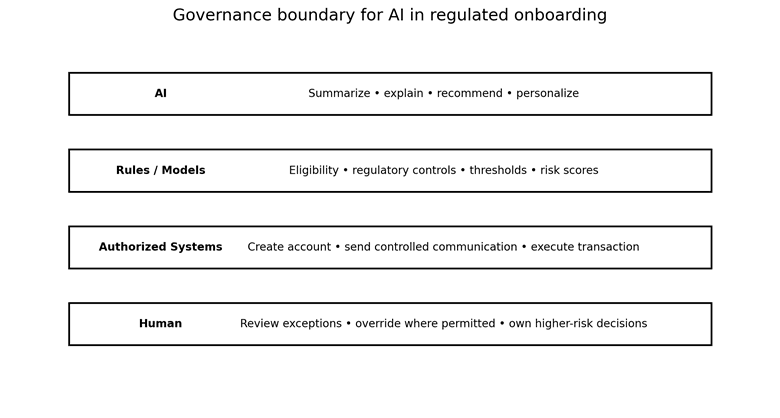
Figure 2. AI assistance, policy rules, system execution and human authority should remain distinct.
Current bank deployments reinforce the value of human-assisted AI. Bank of America said in July 2026 that more than 18,000 employees use EricaAssist, with generative AI providing contextual guidance in under three seconds. The bank describes the tool as helping employees summarize client needs, retrieve relevant information and recommend next steps while maintaining human judgment and governance.
4. Activate: the first 14 days matter as much as account opening
The moment the account opens, an Activation Agent should take over. The objective is not to send more messages. It is to ensure the account becomes usable and relevant.
T+0: a personalized welcome
The first communication should arrive immediately and reflect the actual account and customer journey. It can identify the banker or servicing team, explain the product's relevant benefits and fees, show how to avoid avoidable charges, provide funding and direct-deposit instructions, explain debit-card and digital-wallet activation, and link the approved terms, fee schedule and privacy material.
AI can personalize the explanatory content, but regulated language should remain controlled through approved templates and document versions. The result should be a dynamic welcome pack—not the same generic document bundle for every customer.
T+14: check what actually happened
Two weeks later, the bank should not send a generic 'How are we doing?' email. It should first inspect the relationship. Was the card delivered and activated? Was the account funded? Did expected payroll arrive? Has the customer enrolled in mobile banking, wallet, alerts or person-to-person payments? If something important remains incomplete, the communication should address that specific issue.
Where policy and channel controls permit, relationship communications should identify the customer's banker and provide a clear way to reconnect. The banker should receive the same activation signal with a recommended next action.
5. Engage: replace campaigns with events
A fixed monthly campaign calendar is too blunt for relationship banking. The better model is event-driven engagement: respond when something meaningful changes in the customer's financial relationship.
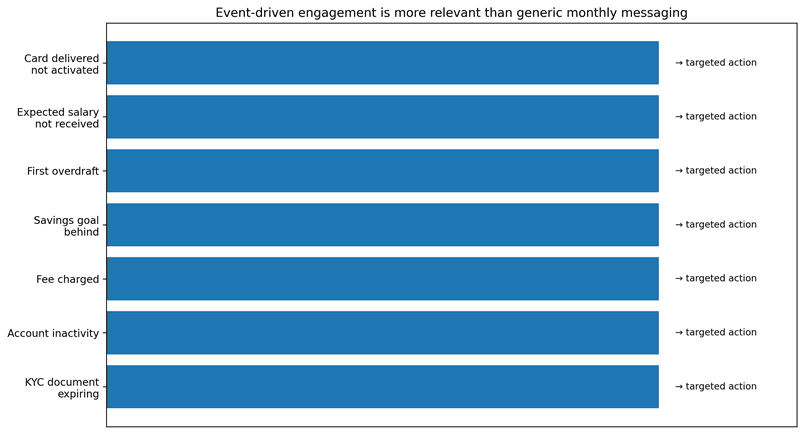
Figure 3. Events create a reason to engage; the monthly review becomes a safety net.
Examples include a delivered card that remains inactive, expected salary that has not arrived, a first overdraft, a savings goal falling behind, a new fee, prolonged inactivity, a large idle balance or an identity document approaching expiry.
Truist provides evidence that large-scale personalized insights are already operational. In August 2026 it said its AI-driven Truist Insights platform had delivered more than two billion personalized, real-time financial insights across mobile and online banking. That does not prove the complete relationship-agent model proposed here, but it demonstrates that personalized, event-like financial guidance can operate at scale.
6. Advise: remember why the customer opened the account
The most valuable information collected during onboarding may not be the account type. It may be the customer's goal: build a $6,000 emergency fund, save for a home, receive salary safely, reduce fees or establish a banking relationship after moving.
A Relationship Agent can preserve that goal and compare it with actual progress. If a customer wants a $6,000 emergency fund in twelve months, the system can track trajectory, identify when progress falls behind and suggest a reasonable adjustment or banker conversation.
This changes the commercial question. Instead of asking only, 'What else can we sell this customer?' the bank can ask, 'What can we do better for this customer?' That may mean helping avoid a fee, automating savings, moving excess idle cash appropriately, simplifying transfers or resolving an activation problem before recommending another product.
Five AI agents, one governed customer context
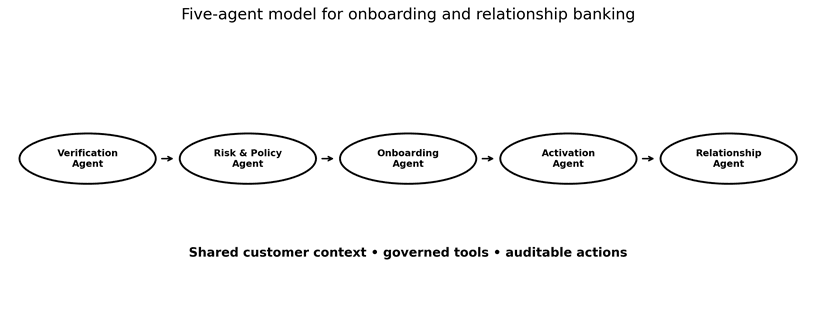
Figure 4. Five specialized agents share context but operate within defined authority.
Verification Agent: Identity, address, documents and data consistency.
Risk & Policy Agent: CIP/KYC/AML, PEP, sanctions, blacklists, fraud, policy and product eligibility.
Onboarding Agent: Application completeness, documents, e-signature, account creation, funding and initial activation.
Activation Agent: T+0, T+3, T+14 and T+30 follow-up plus incomplete-activation events.
Relationship Agent: Goals, fees, account use, financial health, relationship quality and next-best actions.
Contact governance is essential
Personalization can quickly become intrusive if every signal generates a message. Before any outbound action, a Contact Governance Engine should check consent, communication preferences, frequency limits, do-not-contact status, complaints, vulnerability indicators, recent communications, relevance and applicable regulatory rules.
The output should be explicit: SEND, DEFER, BANKER REVIEW or DO NOT SEND. AI should optimize relevance inside those boundaries, not decide that the boundaries do not matter.
What is proven today—and what remains future-state
Production conversational AI; employee AI assistants; personalized financial insights; controlled digital self-service
Already operating in major banks
FEASIBLE
Data-consistency agent; policy copilot; consolidated risk explanation; T+0/T+14 activation agent; event-driven relationship monitoring
Technology exists today but exact end-to-end deployment was not verified across the benchmark banks
FUTURE / ADVANCED
Agentic onboarding coordinating multiple tools with increasing autonomy; predictive relationship management
Requires stronger controls, permissions, monitoring and regulatory comfort
Banks are already moving toward the model
Fifth Third's 2026 mobile AI work is particularly relevant. The bank says Jeanie can help customers complete more than 150 banking needs, with intent-recognition accuracy increasing from roughly 20% to roughly 90% and self-service containment from 3% to 42%. Fifth Third also explicitly describes its AI-powered interface as a foundation for future agentic experiences spanning account opening, routine service, fraud and disputes, and financial advice.
That distinction matters. The future direction is visible, but future account-opening agents should not be scored as already implemented. The same evidence discipline used throughout this research must apply to AI.
The final principle
The transformation is not from human banking to autonomous banking. It is from fragmented, episodic processes to a continuous, governed relationship in which AI helps the bank remember context, interpret signals and act at the right moment.
Account opening should therefore be measured by more than whether an account number was created. A successful relationship should become verified, compliant, funded, activated, used, financially relevant and increasingly trusted.
The most important question for the next generation of banking AI may not be 'What can we automate?' or even 'What can we sell?' It may be: 'What can the bank do better for this customer?'
Methodology note
This article extends the evidence-based ten-bank benchmark into a target AI operating model. Current-bank examples are used only where public evidence supports them. Capabilities not verified in the benchmark are explicitly treated as feasible or future-state. High-risk regulatory decisions remain subject to deterministic policy, authorized systems and human oversight.