
Article · AI in Banking
Designing the Ideal Bank Onboarding Journey
Parts 1 and 2 articles asked which onboarding capabilities can be verified across ten major U.S. banks and how those capabilities compare.
Dato Arif Siddiqui · 12 Sept 2026
Parts 1 and 2 articles asked which onboarding capabilities can be verified across ten major U.S. banks and how those capabilities compare. Part 3 asks a more useful question: if no single bank demonstrates every best capability, what should best-in-class U.S. retail onboarding actually look like?
Do not copy the winner—build a composite benchmark
The benchmark does not suggest copying Capital One, U.S. Bank or any other bank end to end. Each leader contributes a different piece of the target model. U.S. Bank provides a hard digital-speed reference: its current Bank Smartly page says customers can apply online in under five minutes. Capital One demonstrates digital-to-physical identity continuity through mobile QR verification for existing customers and branch/Café verification paths for applicants needing additional identity checks. TD Bank provides unusually visible evidence of multiple in-person identity-verification methods. Truist demonstrates that activation can be embedded directly into onboarding through direct-deposit switching.
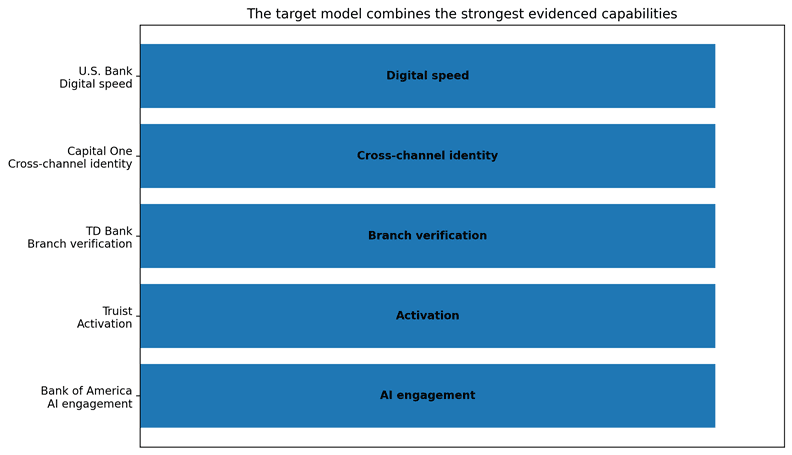
Figure 1. A composite benchmark is more useful than copying one bank.
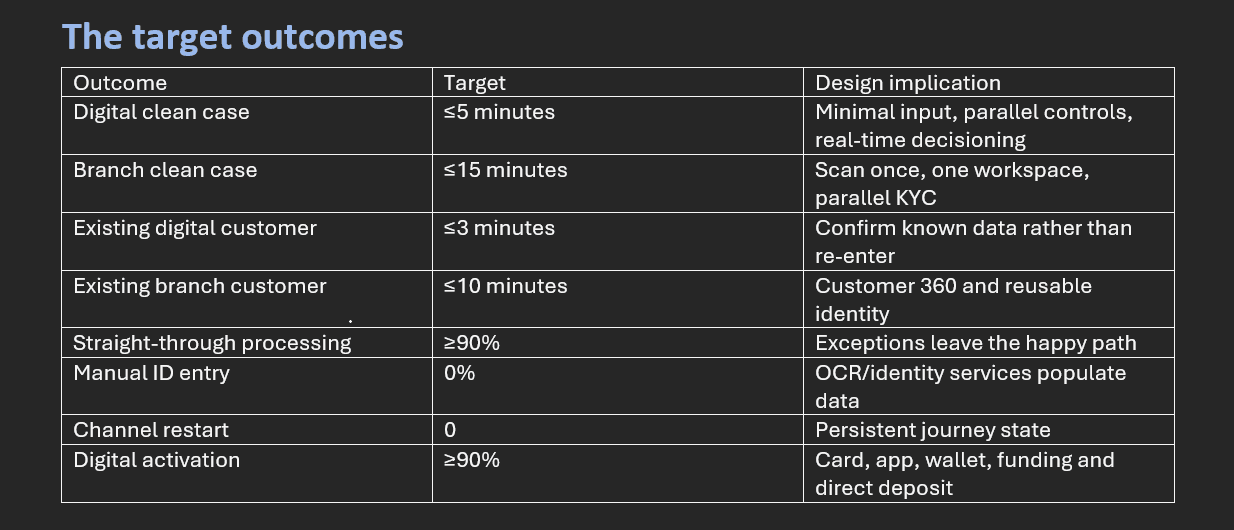
1. The five-minute digital journey
The digital journey should be designed around one principle: capture once, verify continuously and make the customer type as little as possible. Security and compliance should remain rigorous, but most of the complexity should run behind the experience.
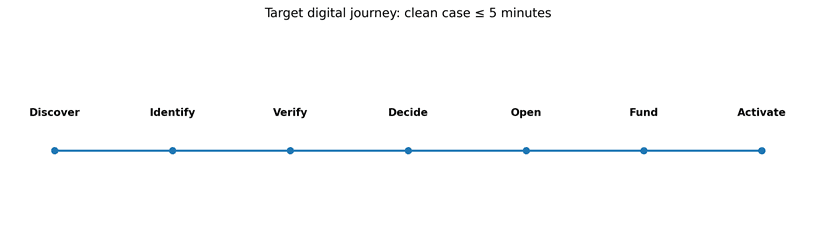
Figure 2. Target clean-case digital journey.
Discover: Ask a small number of needs-based questions rather than forcing the customer to navigate a long product catalogue.
Identify: Capture mobile/email and establish a secure session.
Verify: Capture identity information, validate it and prefill known fields. U.S. Bank’s public under-five-minute benchmark shows the overall speed target is commercially credible.
Decide: Run identity, KYC, sanctions, fraud, duplicate-customer and eligibility checks in parallel.
Open: Present terms, capture e-consent/e-signature and create the account through governed APIs.
Fund: Support immediate internal/external funding.
Activate: Enable digital banking, debit card, wallet, alerts and direct deposit before the journey ends.
Existing customers should confirm—not re-enter
If the bank already knows the customer's legal name, address, phone, email and relationship, the application should present those fields for confirmation. The architecture should distinguish between information that must be re-verified for regulatory reasons and information that merely needs confirmation.
2. The fifteen-minute branch journey
The branch should not reproduce a paper process on a computer screen. The banker should act as an adviser and exception manager, while the platform handles data capture, verification and orchestration.
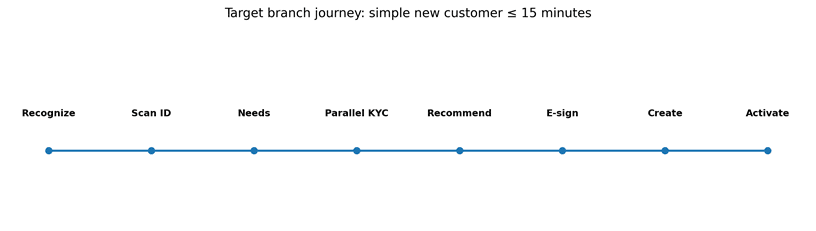
Figure 3. Target simple branch journey.
· Recognize the customer through appointment, mobile, existing relationship or ID.
· Scan the ID once. The banker should not type information that can be captured and validated.
· Use the time saved on data entry for a short needs conversation.
· Run identity, KYC/AML, sanctions, PEP, fraud and duplicate checks in parallel.
· Show the banker a consolidated status rather than six separate control screens.
· Recommend the appropriate product with a clear reason and eligibility check.
· Let the customer review and e-sign digitally.
· Create the account in real time, fund it and complete activation before the customer leaves.
One banker workspace
The branch design depends on a single banker workspace. The banker should see customer profile, current journey, identity/KYC status, exceptions, product eligibility, documents, signature, funding and activation in one place. The underlying systems can remain separate, but the banker should not have to navigate them individually.
3. True omnichannel means no restart
Having a mobile app, website and branch network does not by itself create omnichannel onboarding. The test is whether the same journey can move between channels without losing state.
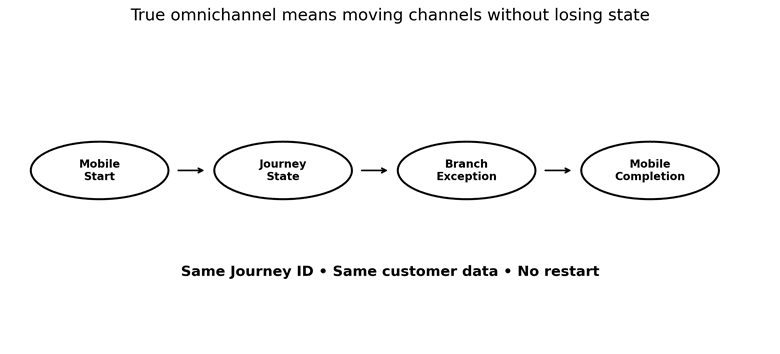
Figure 4. Persistent journey state allows channel changes without restarting.
A customer might complete identity and product selection on mobile, encounter an exception, visit a branch and have the banker retrieve the same Journey ID. The banker resolves the exception, completes e-signature and account creation, and the customer returns to mobile for activation. The reverse should also work: a branch-started application can be securely continued later on the customer's device.
Capital One's current in-person verification guidance illustrates part of this model: applicants requiring further identity verification can be directed to a branch or Café, and existing customers can generate a personalized QR code in the mobile app for in-person identity verification.
4. The technology architecture
The target journey should not be hard-wired into the deposit core. The core remains the system of record, but the experience should be controlled by a journey-orchestration layer that can call reusable identity, KYC, fraud, customer, product, document, card and payment services.
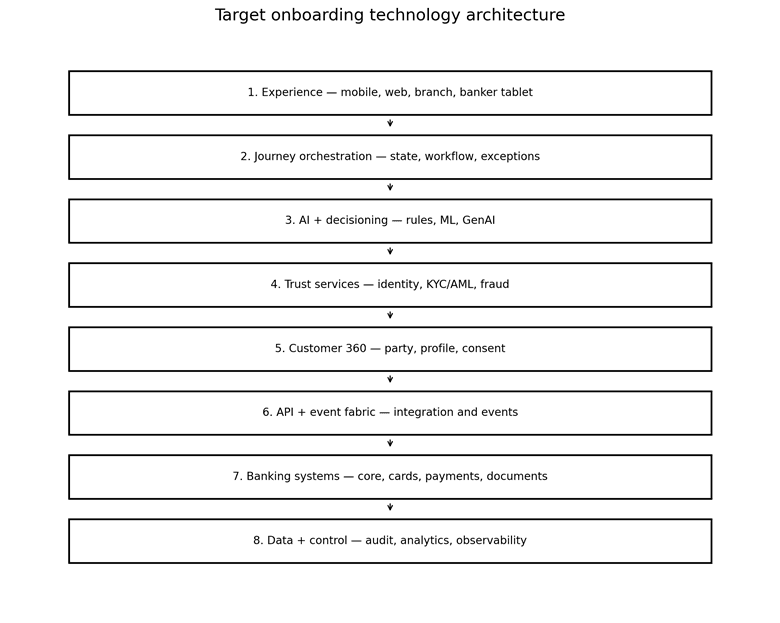
Figure 5. Eight-layer target technology architecture.
Experience: Mobile, web, branch, banker tablet and contact center are interfaces into the same journey.
Journey orchestration: Owns workflow, persistent state, rules, exceptions and channel continuation.
AI + decisioning: Separates deterministic policy rules, machine-learning risk models and GenAI assistance.
Trust services: Provides identity, OCR, biometrics, CIP/KYC/AML, sanctions, PEP and fraud controls.
Customer 360: Maintains enterprise customer identity, relationships, profile, consent and risk context.
API + event fabric: Decouples journeys from legacy systems and lets events trigger downstream actions.
Banking systems: Core, cards, payments, CRM, documents, e-signature and notifications remain authoritative systems.
Data + control: Captures audit trails, journey analytics, observability and model governance.
Parallel processing is the key to speed
A traditional onboarding flow often waits for one check to finish before starting the next. A five-minute journey cannot operate that way. Once sufficient identity data is available, customer search, identity verification, KYC, sanctions, fraud, product eligibility and risk checks should execute concurrently where policy permits.
The customer should see a simple outcome. Clean cases proceed straight through. Amber cases request additional verification or route to review. Red cases stop according to policy. Exceptions should leave the happy path rather than forcing every customer through the slowest process.
5. Modernize around the core
A bank should not wait for a multi-year core replacement before improving onboarding. An API and orchestration layer can abstract legacy complexity. The journey calls a governed capability such as Create Deposit Account; the integration layer translates that request into the transaction required by the underlying core.
This approach also reduces vendor lock-in. Identity verification, biometrics, sanctions data and e-signature can often be bought as services, while the bank should retain control of customer journey design, decision policies, Customer 360 logic, analytics and governance.
6. Measure the journey as an operating system
Every important event should be timestamped: journey start, ID captured, identity passed, KYC passed, product selected, agreement signed, account created, funded and activated. Management should monitor median and P90 completion time—not average alone—along with straight-through processing, exception rates, channel transfers, funding and activation.
Target KPI Benchmark
Clean digital AO ≤5 min
Clean branch AO ≤15 min
STP ≥90%
KYC automation ≥95%
Manual ID entry 0%
E-sign ≥95%
Journey recovery 100%
Channel restart 0
Critical API latency <2 sec
Availability ≥99.95%
Proven, feasible and future
The target model deliberately separates capabilities already evidenced in the benchmark from capabilities that are technically feasible but not publicly verified across the ten banks.
PROVEN: Under-five-minute digital application; digital identity capture; e-sign; direct-deposit switching; mobile-to-physical identity patterns.
FEASIBLE: ID OCR into account-opening fields; parallel KYC orchestration; persistent cross-channel journey state; one banker workspace; Customer 360-driven prefill.
FUTURE / ADVANCED: More autonomous agentic onboarding, predictive intervention and AI-led exception coordination subject to governance.
The design principle
The target architecture can be summarized in three lines: Capture once. Verify once. Use everywhere. A customer should have one enterprise identity, one onboarding journey and the freedom to move between channels without re-entering information. A banker should have one workspace. Compliance controls should run as reusable services. The core should record the account, not dictate the customer experience.
From onboarding architecture to AI relationship banking
Part 4 extends this model beyond account creation. It will examine how AI can validate captured data, interpret policy, consolidate identity and financial-crime signals, generate controlled welcome communications, detect incomplete activation and continue monitoring the customer's goals and relationship after opening.
The strategic shift is important: onboarding should not finish when an account number is created. It should finish when the relationship is verified, funded, activated and positioned to become useful to the customer.
Methodology notes
This target operating model combines capabilities proven in the ten-bank evidence base with explicitly labelled feasible and future capabilities. Target KPIs such as the fifteen-minute branch journey, 90% straight-through processing and 95% KYC automation are design benchmarks, not claims that the reviewed banks currently achieve them.
Selected current sources
· U.S. Bank — Bank Smartly Checking: online application in under five minutes; digital debit card available after digital enrollment while the physical card is in transit.
· Capital One — In-person ID verification: applicants may be routed to a branch/Café; existing customers can use a personalized mobile QR code.
· TD Bank — Security Center: in-person verification using debit card/PIN, smartphone/PIN, physical identification or single-use security code.
· Truist — Direct-deposit switching with Atomic fully embedded into digital onboarding; 19% of engaged applicants completed the switch.