
Article · AI in Banking
AI Use Case in Banking
Artificial Intelligence (AI) is revolutionizing various sectors, including banking. One significant area where AI is making a substantial impact is in Anti-Money Laundering (AML).
Dato Arif Siddiqui · 31 May 2024
Managing Risk in AML by Implementing AI Solution
Artificial Intelligence (AI) is revolutionizing various sectors, including banking. One significant area where AI is making a substantial impact is in Anti-Money Laundering (AML). Financial institutions face significant challenges in managing risks associated with money laundering, terrorism financing, and other illicit activities. Implementing AI in AML processes can enhance efficiency, accuracy, and effectiveness in detecting and preventing these activities.
Overview of AI in Banking
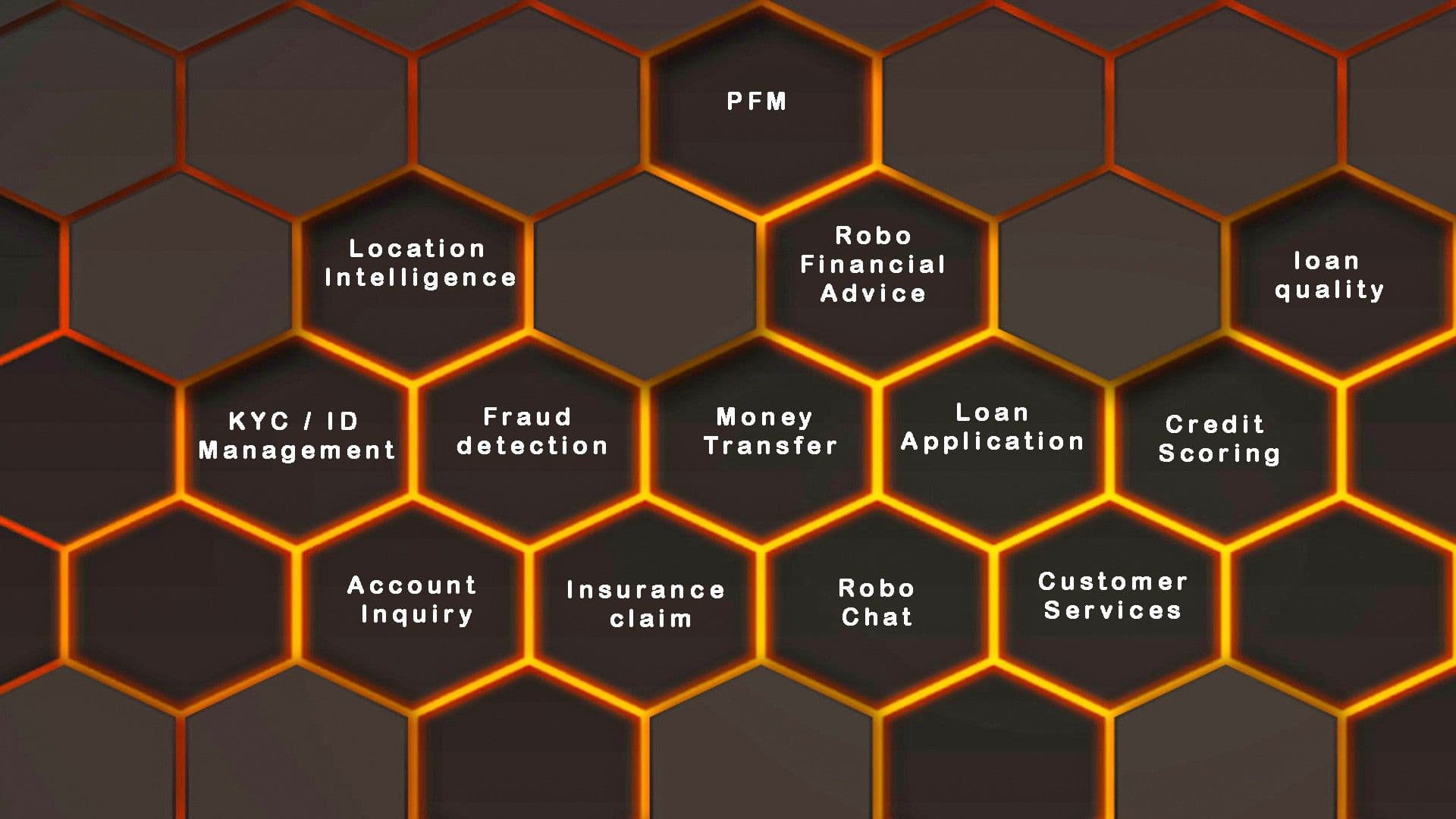
AI technologies are being utilized in numerous areas within the banking sector. These include Personal Finance Management (PFM), location intelligence, Know Your Customer (KYC) and ID management, fraud detection, account inquiry, insurance claims, money transfers, robo-chat customer services, loan applications, credit scoring, and loan quality assessments. Among these, AML is a critical area where AI is particularly beneficial
The Scope of Money Laundering
Globally, an estimated 2-5% of the world's GDP, equating to around $2 trillion, is laundered annually. Money laundering involves disguising the origins of illegally obtained money, typically through complex financial transactions. Banks play a crucial role in identifying and reporting suspicious activities to combat this crime

.Traditional AML Practices
Traditional AML practices involve several steps, including:
- Customer Identification and Verification: Ensuring the customer’s identity is authentic when they open an account or start a relationship with the bank.
- Customer Due Diligence (CDD): Conducting thorough reviews of customer documentation, company information, and understanding their financial activities.
- Transaction Monitoring: Reviewing and analyzing customer transactions against predefined rules to identify suspicious activities.
- Payment Screening: Ensuring transactions comply with regulatory requirements and screening against various watchlists.
- Customer Screening: Checking customers against databases to identify politically exposed persons (PEPs), blacklisted individuals, and others who pose a risk.
Challenges in Traditional AML
Traditional AML processes are often manual and labor-intensive. They rely heavily on rule-based systems, which can result in numerous false positives and negatives. Manual processes are prone to errors and inefficiencies, making it challenging to detect sophisticated money laundering schemes
.The Role of AI in AML
AI enhances traditional AML practices by automating processes and improving accuracy. Key benefits of AI in AML include:
- Increased Risk Detection: AI can analyze large datasets to identify patterns and anomalies that traditional systems might miss. Machine learning algorithms can learn from past data to detect potential risks more accurately.
- Lower Operational Costs: Automating AML processes reduces the need for extensive manual reviews, thereby lowering operational costs.
- Improved Governance: AI provides banks with better oversight and control over their AML processes, ensuring compliance with regulatory requirements.
- Continuous Learning: AI systems continuously learn from new data, improving their ability to detect suspicious activities over time.
- Enhanced Customer Experience: By reducing false positives, AI minimizes unnecessary interactions with customers, leading to a better customer experience
Implementing AI in AML
Implementing AI in AML involves several steps:
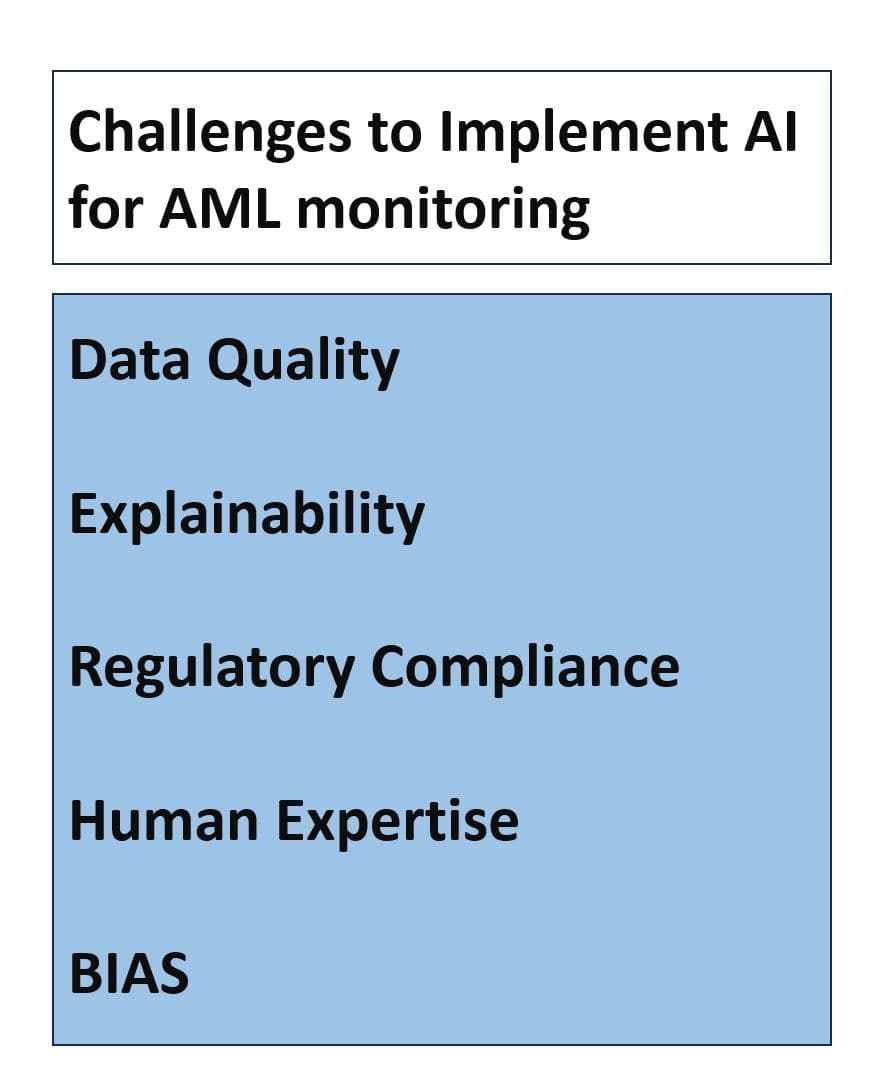
- Data Quality: Ensuring the quality of data is critical for the effectiveness of AI systems. Banks must clean and standardize their data to ensure accurate analysis.
- Explainability: AI systems must provide explanations for their decisions to ensure transparency and regulatory compliance.
- Regulatory Compliance: AI systems must adhere to strict regulatory requirements. Banks need to ensure that AI models comply with AML regulations.
- Human Expertise: Despite automation, human expertise is essential for interpreting AI outputs and making informed decisions. Training staff to work with AI systems is crucial.
- Bias Management: AI systems must be designed to minimize bias. Ensuring fairness and accuracy in AI decision-making processes is vital.
Case Studies
Several banks have successfully implemented AI in their AML processes
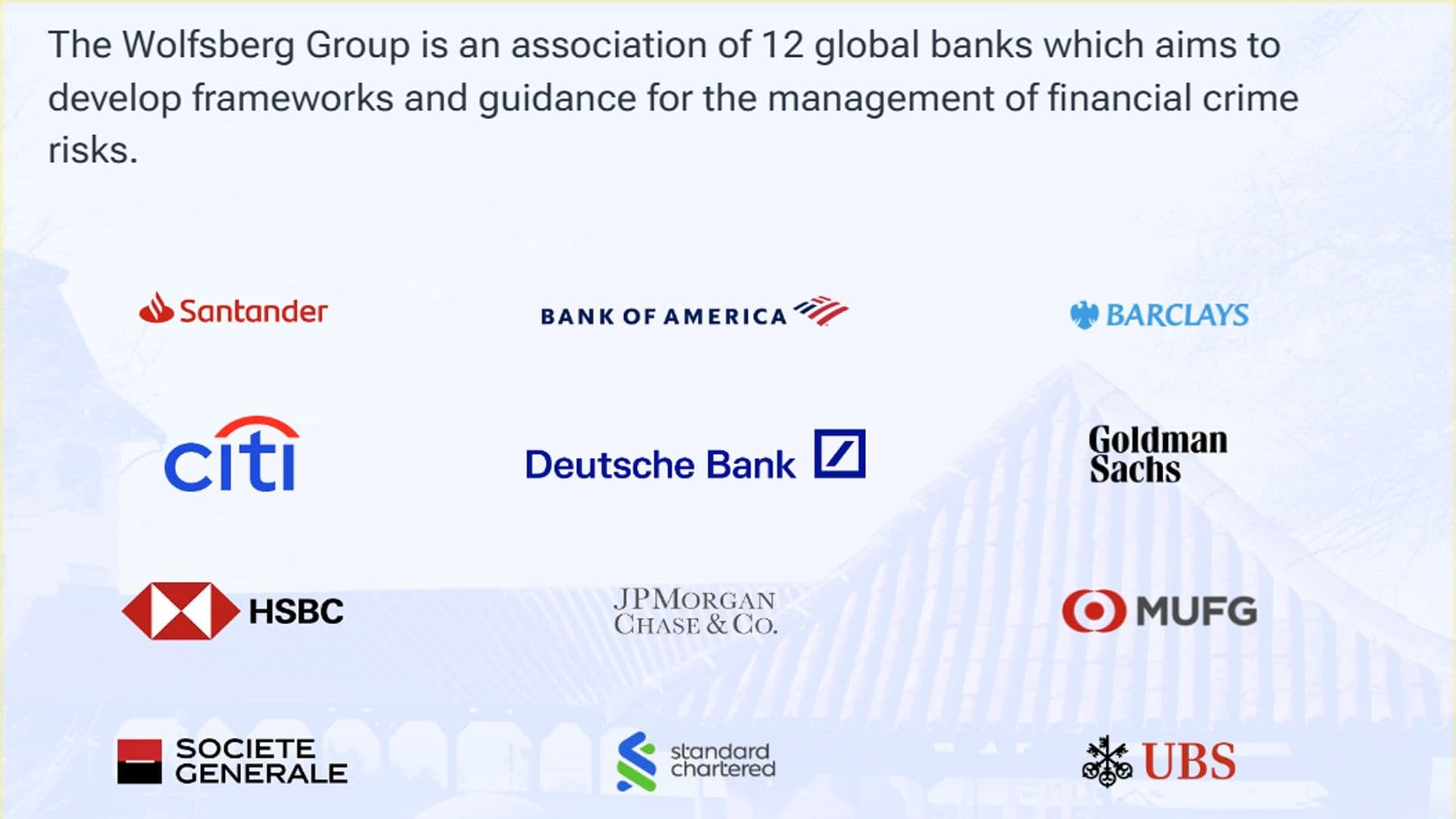
- Standard Chartered Bank: Utilizes AI to gain a 360-degree view of customer risk, enhancing their AML capabilities.
- HSBC: Collaborated with Google to develop an AI-driven AML solution, improving their ability to detect suspicious activities.
- JPMorgan Chase and ING: Both banks use AI to automate and enhance their AML processes, reducing operational costs and improving risk detection.
AI is transforming AML in the banking sector, providing enhanced risk detection, reduced operational costs, improved governance, continuous learning, and a better customer experience. By addressing challenges such as data quality, explainability, regulatory compliance, human expertise, and bias management, banks can effectively leverage AI to combat money laundering and other financial crimes. The integration of AI in AML processes is not just a technological advancement but a strategic imperative for banks to safeguard their operations and reputation.