
Article · AI in Banking
AI-Driven Bank Account Opening: Faster Branch Onboarding
Banks across the United States and globally are under sustained pressure to reduce the time it takes to open a checking or savings account while maintaining strict compliance with Customer Identification Program (CIP),…
Dato Arif Siddiqui · 24 Jan 2026
Banks across the United States and globally are under sustained pressure to reduce the time it takes to open a checking or savings account while maintaining strict compliance with Customer Identification Program (CIP), Know Your Customer (KYC), Anti‑Money Laundering (AML), and fraud‑prevention regulations. Over the last decade, the bottleneck has shifted away from regulation itself and toward process design, system integration, and data automation. Modern account opening platforms are now evaluated not only on compliance coverage, but on how effectively they reduce manual data entry, automate decisioning, and enable straight‑through processing across branch, online, and mobile channels.
A high‑performing account opening journey follows a predictable pattern. It begins with a low‑friction application start, continues with automated identity capture and data prefill, executes real‑time KYC and fraud checks, enables digital disclosures and signatures, and ends with immediate account funding and core system boarding. Platforms that fail at any of these stages introduce manual intervention, which directly increases branch time, staff cost, and customer abandonment rates.
Fiserv positions its account opening capabilities, particularly Deposit Director Flex, as an omnichannel deposit origination solution. Its primary strength lies in allowing customers to start an application on one channel and complete it on another, such as beginning online and finishing in a branch. Fiserv emphasizes multi‑account sessions, enabling a customer to open checking, savings, and related products in a single flow. This design reduces duplicate data entry and supports cross‑sell opportunities during onboarding.
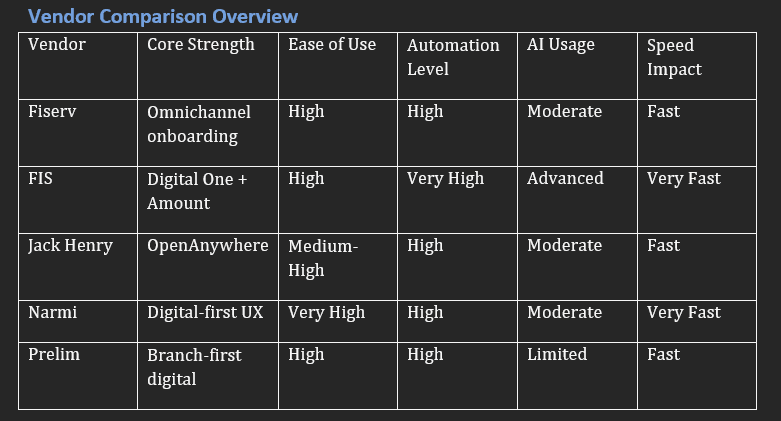
From a usability perspective, Fiserv’s platform benefits significantly when it is tightly integrated with the institution’s core banking system. In well‑implemented environments, customer data captured through OCR‑enabled ID scanning or existing customer records flows directly into the core, minimizing rekeying. However, the actual speed achieved varies by bank configuration, disclosure length, and the number of exception rules triggered during identity verification. Fiserv does not market Deposit Director Flex as a standalone AI‑driven decisioning engine, but instead relies on integrations with identity, fraud, and analytics partners where machine learning is applied.
FIS approaches account opening through its Digital One platform, strengthened significantly by its acquisition of Amount. Digital One Online Account Open is explicitly marketed as enabling account opening in five minutes or less under optimal conditions. The platform emphasizes save‑and‑resume functionality, real‑time funding options, and prefill for existing customers. These features directly reduce form length and abandonment, particularly for customers who already have a relationship with the bank.
The integration of Amount into FIS’s ecosystem is notable because FIS explicitly positions it as embedding artificial intelligence into origination workflows. In practice, this means machine‑learning models are used to optimize identity verification, fraud scoring, and automated decisioning. Safe applications are routed straight through, while higher‑risk cases are escalated for manual review. This risk‑tiered approach is one of the most effective ways to reduce branch and digital onboarding time without increasing fraud exposure.
Jack Henry’s OpenAnywhere platform is widely adopted among community and regional banks. Its design philosophy emphasizes configurable workflows and frictionless identity verification, including selfie‑based ID matching. OpenAnywhere integrates with Jack Henry's core systems, such as SilverLake and CIF, which simplifies deployment for existing Jack Henry clients. The platform supports digital and branch account opening and allows banks to integrate third‑party identity and fraud tools based on their risk appetite.
While Jack Henry does not market OpenAnywhere as an AI‑first platform, artificial intelligence is implicitly present through biometric verification, document authentication, and partner integrations. The strength of OpenAnywhere lies in operational flexibility and ease of alignment with community‑bank compliance models. For institutions prioritizing control, configurability, and predictable workflows, this approach can be more valuable than fully automated decisioning.
Beyond the core providers, many banks adopt fintech overlay platforms such as MANTL, Narmi, or Prelim to accelerate onboarding. These platforms focus heavily on user experience, rapid deployment, and measurable reductions in account opening time. Published case studies show that some banks have reduced in‑branch account opening time from over an hour to under ten minutes by using these tools in combination with their core systems. These overlays typically rely on extensive API integrations with identity, fraud, and core platforms to achieve straight‑through processing.
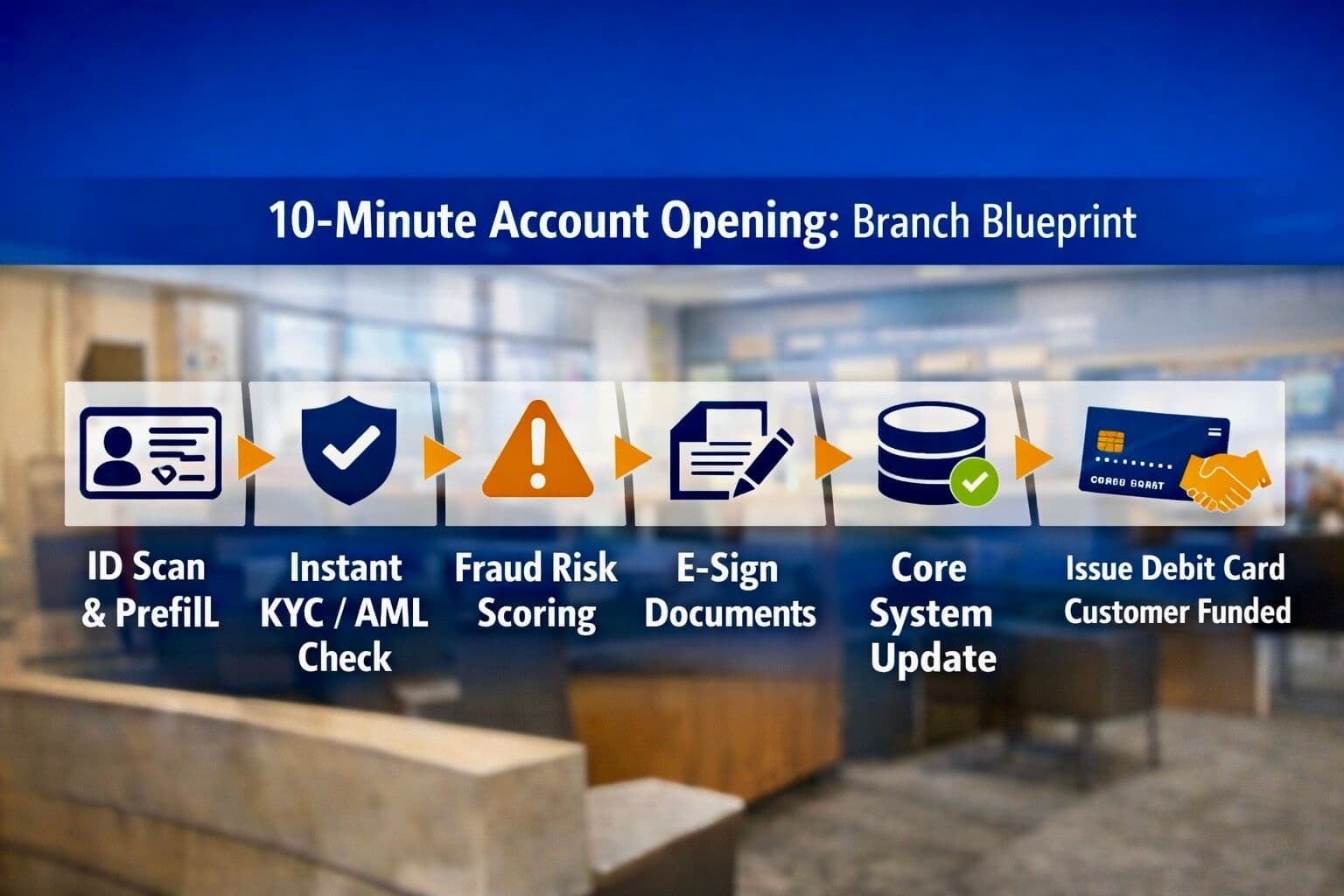
The role of artificial intelligence across all vendors is best understood at the process‑step level rather than as a single feature. AI is most impactful in identity resolution, fraud risk scoring, and decision routing. Platforms that use AI to reduce false positives in identity verification and fraud detection consistently outperform those relying on rigid rules alone. This directly translates into fewer manual reviews, faster approvals, and lower operational costs.
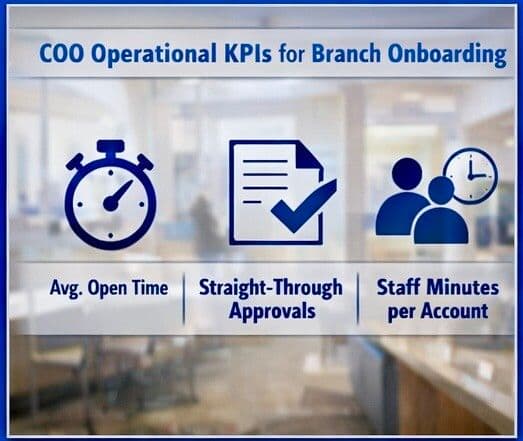
In practice, no single platform delivers optimal results in isolation. The most successful banks combine a strong core‑aligned account opening solution with best‑of‑breed identity verification, fraud detection, and digital banking layers. Selection decisions should be guided by measurable outcomes such as average time to open, percentage of straight‑through approvals, abandonment rates, and cost per funded account.
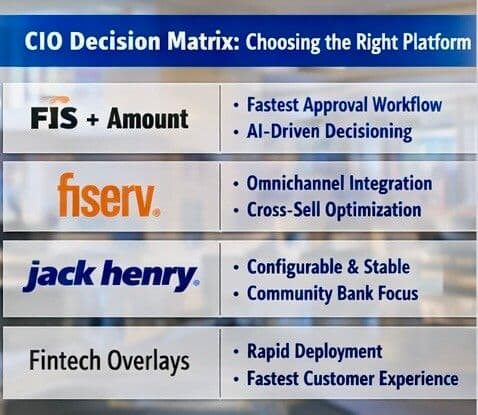
Account opening platforms have evolved from basic form‑capture tools into strategic infrastructure for customer acquisition. FIS currently leads in explicitly embedded AI‑driven decisioning, Fiserv excels in omnichannel deposit origination and cross‑sell orchestration, and Jack Henry offers strong configurability and community‑bank alignment. Fintech overlays further enhance speed and experience. Banks that treat onboarding as a strategic capability rather than a compliance necessity are consistently achieving superior operational and growth outcomes.
Account opening is no longer a back-office operational step; it has become a frontline customer-acquisition engine. Banks that intentionally redesign onboarding around speed, deep automation, and AI-assisted decisioning are removing friction at the very first customer interaction. The result is measurable—faster account opening, lower staff effort, higher completion rates, and stronger customer satisfaction. Institutions that treat onboarding as a strategic capability, rather than a compliance necessity, are consistently outperforming peers in growth, efficiency, and long-term profitability.